Afro-Centric Bible Study/Working Document
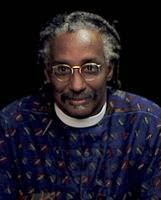
Alan L. Joplin, Wesley Foundation Director
Introduction. The cultural integrity of any given faith community is highly dependent on the faith community’s ability to transmit its cultural and religious values to young people. Many African American churches complain that young people are not being adequately incorporated into the faith traditions of African American churches. In fact, in recent years there has been a proliferation of unchurched young people who are engaged in different lifestyles. Thus, churches find themselves struggling to figure out what role(s) they can and should play in the socialization of African American youth, and youth in general. The general mission of this program is to transform young people into Disciples of Christ and support decision-making processes that bring young people into greater harmony with the will of God.
Mission Statement. This Bible Study program seeks to implement and promote Bible Study from an African perspective using an Afro-centric lens.
Statement of Problem. The strategies used will shape the moral consciousness of African American youth and it will address two fundamental issues:
• the problem of identity among African American teen-agers and young adults.
• the increased number of unchurched African American teen-agers and young adults.
Accordingly, the challenge facing this program is how to work with formal and informal social structures within the African American community to enhance the student’s cultural, historical, and theological competence.
Overview. All who are interested in studying God's Word may attend.. We encourage each person interested in attending to seek God's will and direction before applying.
This Biblical Studies is designed to bring students and members of local congregations of the African diaspora, of the surrounding communities, and other interested persons together on a bi-weekly to respond to the critical challenges facing the Black faith and community from an Afro-Centric perspective.
During the study secession, they will be reminded of the value of the Christian education and the necessity of their own spiritual formation and growth, they are taught about Christian education from an African American perspective, and they are reminded of the church's role in the community and in society at large. Bible study leaders will be selected for each period and will lead an two hour long Bible study.
We are committed to:
1. Establishing Christians in the faith by:
a. developing a knowledge and understanding of the Word of God
b. teaching Christian discipline
c. providing wholesome Christian fellowship
2. Training students for Christian service by:
a. giving a working knowledge of the Word of God
b. giving an opportunities for practical experiences in Christian service
Program Design. The learning process will be highly interactive and will include participant engagement in independent study, assignments, discussions, daily devotions, and journaling. The general format for each session will include: Opening devotion; topic overview; presentation of key concept; group discussion (exercise); question/answers; and new assignments. Content experts will be brought in occasionally to speak on specific topics.
Goals and Objectives. Our goals is to equip teen-agers and young adults. with an education for life with Christian values by providing a forum where university student can learn the Word of God and learn to apply biblical concepts for daily living and social change, to help develop leadership in local congregations, to build bridges between the church, the community and the university, and finally to encourage persons of African descent to embrace their rich history and heritage
.
The specific objectives of this Bible Study are as follows:
• To nurture an appreciation for the traditions of the Black Church in the African American experience.
• To provide opportunities for students to enhance their capacities to nurture young people into the Christian faith.
•
• To assist students in developing their teaching, facilitation and discussion skills as well as their abilities to encourage and motivate there peers
Our goals are to provide::
• Bible study that is Christ centered.
• The regular, in-depth study of the Holy Scriptures in a manner that is prayerful, organized and dialogical.
• Bible study that points out, highlights and embraces African-American biblical scholars.
• Biblical study that inspires the discovery of God's present day message to African Americans.
• 5. Bible instructions that nurture individual, collective, spiritual and personal development through in-depth meditation that enables students to realize "Who they are and Whose you are!"
Results (Expected Outcomes). The primary goal of the Afro-Centric Bible Study is to examine the notion of lifecycle development as reflected in traditional African religion and the early Christian church. The intent of the study is to produce the following outcomes:
Outcome One: Knowledge of key theological concepts and their place in the development of faith. The Participants will
• Develop a working knowledge of key theological concepts (e.g., hermeneutics, exegesis, pneumatology, ecclesiology, eschatology, Christology, etc.)
• Increase their familiarity with biblical passages that are specifically related to the themes of Rites of Passage (e.g., birth, initiation, marriage, illness, and death) by focusing on how these themes are reflected in the lives and experiences of various biblical characters
Outcome Two: Understanding of the process by which Jesus imparted esoteric information to his disciples. The participants will:
• Develop an appreciation for how Jesus taught his disciples (i.e., marriage, family, children, kingdom of heaven, healing, demonic forces)
• Elect to renew their commitment to God, the church and the African American family
• Explain their theological justification for living a Christ-rooted and African-centered lifestyle.
Outcome Three: Awareness and knowledge of the role that the African worldview plays in the development of a faith. The Participants will:
• Increase their knowledge of the traditional African beliefs and values
Outcome Four: Skills to design program activities that will meet the cognitive and behavioral goals of a faith based Rites of Passage program. The Participants will:
• Develop an appreciation for the notion of life cycle development (i.e., birth, pubescence, adolescence, adulthood, and eldership)
• Increase their understanding of and appreciation for their own spiritual gifts
Outcome Five: Understanding of the use of rituals in facilitating a faith based Rites. The Participants will
• Increase their knowledge of the purpose of ritual celebration in a faith .
• Increase their appreciation for how rituals are reflected in the bible
• Develop an appreciation for the meaning and purpose of sacred space in a faith.
• Increase their understanding of the role the Black Church played in facilitating the cultural adaptation of Black people within the historical context of the United States
• Develop an appreciation for meaning of the Invisible Church during the Antebellum Period of American history.
• Heighten their awareness of the how the Black church minimized the effects of the slave mentality (which was peculiar to African American people)
Proposed Courses
September 11, 2003- Black Theology. Provides the foundation for black theology, exploring the black/African religious experience, and combining the black religious experience with the affirmations of the Christian Creed.
September 25, 2003-AFRICAN PRESENCE IN THE BIBLE - This course answers questions that help African-American Christians view the Bible through an Africentric lens.
October 2, 2003- Theologies of Liberation.. Critical examination of black, African, Latin American, and feminist theologies of liberation, interpreting models of action and reflection as the Christian faith confronts racism, classism, and sexism.
October 9, 2003-AFRICENTRIC CHRISTIANITY - Is it possible to be culturally Africentric and a devout Christian at the same time? This course will provides theological assessment of Africentrism and its relationship to Christianity.
October 23, 2003-UNASHAMEDLY BLACK & UNAPOLOGETICALLY CHRISTIAN - This course examines our doctrines as a local church, and the United Church of Christ as our denomination and its African-American witness.
October 30, 2003-THE MYTH & MEANING OF MALCOLM X - This class analyzes a selective group of writings by and about Malcolm X.
November 6, 2003- GOD’S WORD AND MY SALVATION - This class discusses topics such as salvation, sin, the trinity, along with answers to the frequently asked questions about speaking in tongues, conservatism, women preachers and many more.
November 13, 2003-WHAT MAKES YOU SO STRONG - This class is multifaceted. We learn about the patriarch of ancient Israel, the poets and prophets of the exile, a barren woman and a favored queen, a capricious judge and three devout young prisoners of war. This class reveals a candid snapshot of God.
November 20, 2003-SPACE FOR GOD - This course teaches students the practice of prayer, spirituality, meditation and the importance of journaling daily meditations.
Martin Luther King Day Symposium-2004
January 20, 2004-The Theology of Martin Luther King, Jr.. Treats King as a theologian, evaluating his understanding of Christian doctrines and examining his contribution to theological ethics.
January 20, 2004A Christian Spirituality of Restorative Justice In this course we will investigate a Christian spirituality of justice in which God’s aim for creation is not destruction—rather, it is restoration. Students will take seriously the meaning of Christian spirituality in this endeavour as themes of prayer and spiritual disciplines make sense of how God uses persons for restoration.
January 20, 2004Foundations of Emancipatory Theology.. Exploration of some of the factors which contribute to the Christian understanding of freedom, and the theological imperatives which inform the quest for human emancipation. Special focus will be placed on the biblical, historical, and contextual foundations of the theological discourse, with major emphasis on the Black experience.
Proposed Spring topics/2004
GOD’S WORD AND MY SALVATION - This class discusses topics such as salvation, sin, the trinity, along with answers to the questions about speaking in tongues and more
ABUNDANT LIFE –This course is designed to help Christians grow spiritually and possess the joy-filled Abundant Life Christ promises.
NEW TESTAMENT SURVEY - This course is an overview of the 27 books of the New Testament.
Religion in Africa. A study of religion in Sub-Saharan Africa. Attention is given to the nature and function of religion in the traditional societies and to the modern developments of Christianity and Islam in Africa
Black Theology and Black Church. A study of Black theological discourse in the United States and Africa. The course focuses on the composite causes of racial oppression and explores the relationship between black theology and "third world'' peoples, women's struggles, black families, and, most importantly, the praxis of black church ministry.
Womanist Theology. The course explores what Black women’s experiences in church and society suggest about the meaning of God and Jesus Christ.
Third World Theologies.. Examines the development of Christian theology in the non-Western world; theological developments and the process of contextualization and politicization of theologies in Latin America, Africa, and Asia, comparing them with black theology.
Ministries of Prayer and Praise A course that focuses on a study of the Black experience within our Christian worship heritage, with an emphasis on understanding social justice as liturgical action and individual gifts as the basis for developing ministries of prayer and praise.
Theology and the Black Experience The purpose of this course is to use the African-American experience and search for identity in America as a lens through which to understand the development of African-American theology in the context of the Christian tradition.
In Our Own Voices This preaching course will offer women the opportunity to explore and discern their own voices in preaching. Students will reflect on the historical, theological and biblical significance of women in the pulpit and will have an opportunity to participate in practical preaching exercises.
The Black Church and the American Experience Reflecting on the diverse character of American religion and its influence on American culture, this course explores themes of race, and the dynamics of race, gender, and politics in American history.
Theology, Ministry, and Public Life The goal of this area is to connect theological, biblical, ethical and ministerial study to the challenge of establishing and renewing the public life of the church and civil society. This courses will situate general theological study in relation to institutions, social groups and movements; and will examine issues such as how churches interact with other institutions, the role of religion in public discourse and association, and the potential public character of theological discourse.
The Meaning of the Sacraments This course is a theological examination of the sacraments and their place in the life, worship and witness of the church. Attention will be given to the place of ritual and gesture in Christian worship, the biblical basis for the sacraments, the historic debates and controversies as well as the more recent ecumenical discussions and agreements.
Theology and the Black Experience
Church, Community, and Ministry
Introducing Black Theology of Liberation.
African American Christian Education
Images of Church and God in Black Womens' Literature.
Sexual Issues in the Black Church and Community.
posted by reverend alan l. joplin/voices of the tribe ministries at
3:31 PM


<< Home